

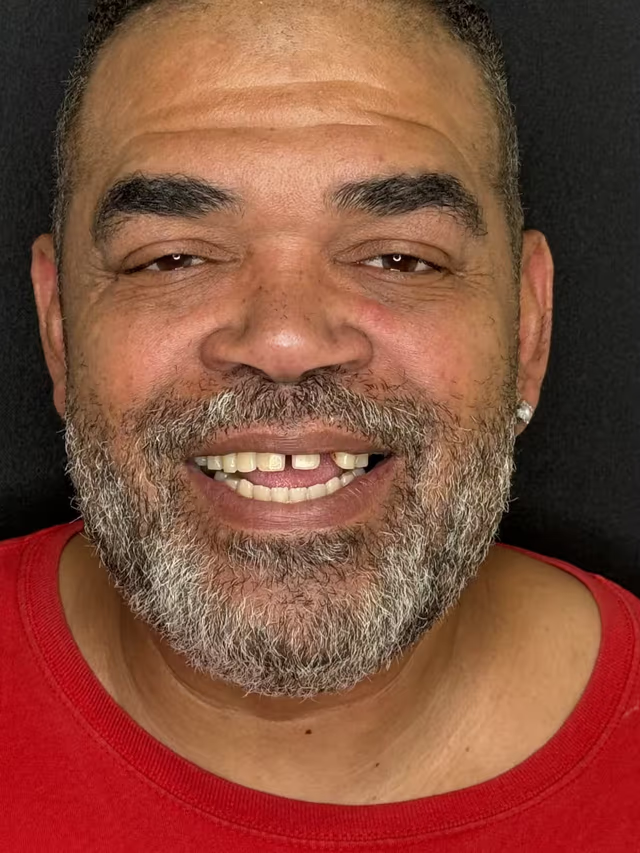
 Before
After
Before
After
Terry: All-on-4 Fixed Dentures
Drag the handle to compare. Individual results vary, see more in our Smile Gallery.
A Permanent Solution for Missing or Failing Teeth
If you’ve lost most or all of your teeth, or you’re living with teeth that are failing due to decay, gum disease, or years of dental work that’s breaking down, All-on-4 dental implants offer a way to start over with a full, fixed set of teeth that look, feel, and function like your own.
Unlike removable dentures that sit on your gums and can slip, loosen, or limit what you eat, All-on-4 implants are permanently anchored in your jawbone. They don’t come out at night. They don’t require adhesive. And because they stimulate the bone the way natural tooth roots do, they help preserve your jawbone structure over time, something dentures can’t do.
At White32 Dental, we provide All-on-4 consultations for patients across NW Washington, DC who are exploring permanent options for tooth replacement. Whether you’re currently wearing dentures and want something more stable, or your remaining teeth are beyond saving, this page will help you understand how All-on-4 works, who it’s right for, and what to expect.
How All-on-4 Dental Implants Work
The concept behind All-on-4 is straightforward: instead of placing a separate implant for every missing tooth (which can mean 8-12 implants per arch), just four implants are strategically positioned in your jawbone to support an entire arch of fixed replacement teeth.
Strategic implant placement
Two implants are placed vertically in the front of the jaw, where bone is naturally thickest. Two more are placed at an angle in the back, which allows them to anchor into available bone without requiring bone grafting in most cases. This angled placement is what makes All-on-4 viable for many patients who’ve been told they don’t have enough bone for traditional implants.
Immediate function
In many cases, a set of temporary teeth is attached to the implants on the same day as surgery. You walk into the office with failing or missing teeth and walk out with a functional set, not perfect yet, but stable enough to eat soft foods and smile with confidence while your permanent set is being crafted.
Final restoration
After a healing period of several months (typically 3-6 months), during which the implants fuse with your jawbone through a process called osseointegration, your permanent custom bridge is fabricated and placed. This final restoration is designed to look natural, fit precisely, and last for years.
All-on-4 vs. Traditional Dentures vs. Individual Implants
Patients considering All-on-4 are usually weighing it against two other options: traditional dentures or individual dental implants. Each has a place, and the right choice depends on your situation.
All-on-4 vs. removable dentures
Traditional dentures are the most affordable option for replacing a full arch of teeth, but they come with well-known limitations. They rest on the gums and are held in place by suction or adhesive, which means they can shift during eating and speaking. Over time, the jawbone beneath dentures shrinks because it’s no longer stimulated by tooth roots, causing the fit to worsen and the facial structure to change. All-on-4 implants are fixed in bone, preserving jaw structure and providing a level of stability that dentures simply can’t match.
All-on-4 vs. individual implants
Replacing every missing tooth with its own implant is the most comprehensive approach, but it’s also the most invasive and expensive. A full arch might require 8-12 individual implants, multiple surgeries, potential bone grafting, and a timeline that stretches well over a year. All-on-4 achieves a similar result with just four implants, fewer procedures, and a faster path to functional teeth. For patients missing most or all of their teeth, All-on-4 is often the more practical and cost-effective route.
All-on-4 vs. implant-supported dentures
Implant-supported dentures (also called snap-on dentures) use 2-4 implants to anchor a removable denture. They’re more stable than traditional dentures but still come out for cleaning. All-on-4 provides a fixed bridge that stays in place permanently, brushed and cared for like natural teeth.
Are You a Good Candidate for All-on-4?
All-on-4 dental implants are designed for patients who are missing all or most of their teeth in one or both arches, or whose remaining teeth are failing and need to be extracted. You may be a strong candidate if you are currently wearing dentures and frustrated with the fit, comfort, or dietary restrictions, or if you have teeth that are severely decayed, broken, or affected by advanced gum disease beyond what individual restorations can save, or if you’ve been told you don’t have enough bone for traditional implants, the angled placement technique used in All-on-4 often works with less bone than conventional approaches.
Certain factors require careful evaluation before proceeding. These include uncontrolled diabetes or other conditions that affect healing, active smoking (which significantly increases implant failure risk), and severe bone loss that may require additional procedures even with the All-on-4 approach. During your consultation, Dr. White will assess your bone structure using digital imaging, review your medical history, and discuss whether All-on-4 is the right path for you.
Caring for Your All-on-4 Implants
One of the biggest advantages of All-on-4 is how simple maintenance is compared to dentures. Your permanent bridge stays in place and is cared for much like natural teeth, brush twice daily, floss with a water flosser or specialized floss threaders, and visit our office for regular professional cleanings and checkups.
Avoid chewing extremely hard items like ice or hard candy, which can damage any dental restoration. If you have a history of grinding, a protective nightguard may be recommended to protect your investment while you sleep.
With proper care, All-on-4 implants can last decades. The implants themselves are designed to be permanent, while the prosthetic bridge may need maintenance or replacement after 10-20 years depending on material and wear.
All-on-4 Dental Implants in NW Washington: DC
White32 Dental is located at Foxhall Square, 3301 New Mexico Avenue NW, Suite 323. We see patients from Georgetown, the Palisades, Spring Valley, Glover Park, Wesley Heights, and across the greater DMV for implant consultations, including patients who’ve been referred by other dental offices for full-arch reconstruction.
If you’re considering All-on-4 and want an honest evaluation of whether it’s right for you, call us at (202) 686-6333 or book a consultation online. We’ll take the time to understand your situation, explain every option, and help you make an informed decision.
Frequently Asked Questions About All-on-4 Dental Implants
How long do All-on-4 dental implants last?
The titanium implants are designed to be permanent and, with proper care, can last a lifetime. The prosthetic bridge attached to the implants typically lasts 10-20 years before needing maintenance or replacement, depending on the material used and daily wear.
Is the All-on-4 procedure painful?
The surgery is performed under local anesthesia with sedation available for comfort. Most patients report that the procedure is less uncomfortable than expected and that any post-surgical soreness is manageable with prescribed medication for a few days.
Can I get All-on-4 if I’ve been told I don’t have enough bone?
In many cases, yes. The angled implant technique used in All-on-4 is specifically designed to work with available bone, often eliminating the need for bone grafting. During your consultation, we’ll assess your bone structure and determine whether All-on-4 is feasible for your situation.
How much do All-on-4 dental implants cost?
The cost varies based on the complexity of your case, the materials selected for your permanent bridge, and whether additional procedures like extractions are needed. We provide a detailed cost breakdown during your consultation so there are no surprises. We accept most major insurance plans, offer payment plans, and provide financing through Cherry.
How soon can I eat after All-on-4 surgery?
Most patients can eat soft foods the day after surgery. As healing progresses over the following weeks, you’ll gradually return to a normal diet. Once your permanent bridge is placed, you can eat virtually anything, one of the biggest advantages over removable dentures.
What’s the difference between All-on-4 and regular dental implants?
Traditional dental implants replace individual teeth, each with its own implant post and crown. All-on-4 uses just four implants to support an entire arch of teeth, making it more efficient and often more affordable for patients who need full-arch replacement.
Do I need All-on-4 for both my upper and lower teeth?
Not necessarily. All-on-4 can be done on one arch or both, depending on your needs. Some patients need full-arch replacement on top but may only need a few individual implants or a bridge on the bottom, or vice versa.
Related Services
• Tooth Extractions, often performed as part of the All-on-4 procedure
• Full Mouth Reconstruction, for complex cases that may combine implants with other restorative work
• Full and Partial Dentures, an alternative for patients who prefer a removable option
• Root Canal Therapy, to save individual teeth that may not need extraction
• General Dentistry, ongoing preventive care after your implants are placed
Ready for a Healthier,
More Confident Smile?
Experience modern, patient-centered care at Foxhall Square. Our experienced team under Dr. Charles White is dedicated to delivering elite clinical excellence and personalized dental artistry.