

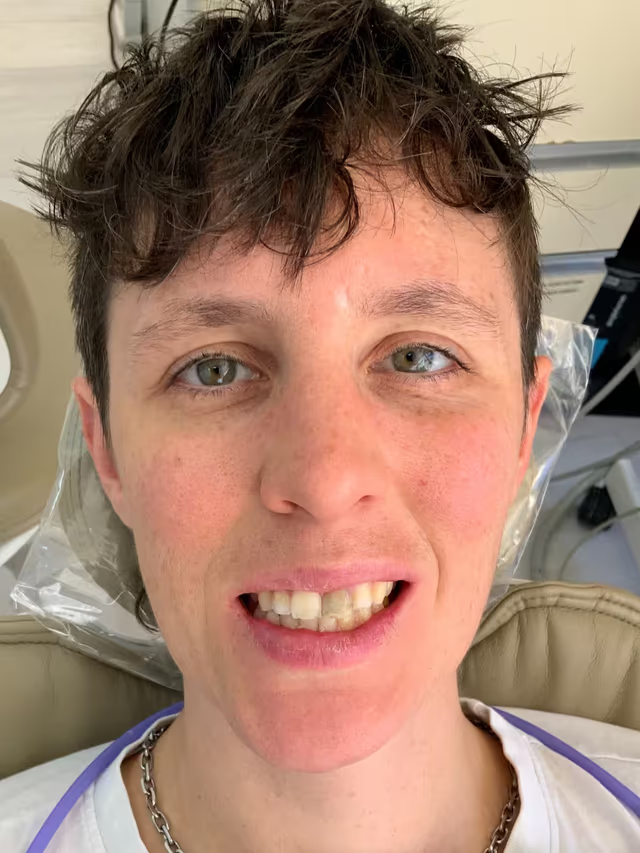
 Before
After
Before
After
Louise: Veneers, Crowns & Whitening
Drag the handle to compare. Individual results vary, see more in our Smile Gallery.
A whiter smile is one of the fastest ways to look healthier, more polished, and more confident, and it’s one of the most requested cosmetic treatments at our Washington, DC practice. But not all whitening is created equal. Over-the-counter strips and mail-order trays can produce uneven results, increased sensitivity, and damage to enamel when used incorrectly.
Professional teeth whitening at White32 Dental is different. Under the supervision of Dr. Charles White, we use clinical-grade whitening agents calibrated to your enamel, your sensitivity level, and your goals, delivering results that are several shades brighter, more even, and longer-lasting than anything you can buy at a drugstore.
Whether you want dramatic same-day results before an event or a gradual brightening on your own schedule, we have an option that fits.
Our Teeth Whitening Options
We offer two professional systems, Zoom® for same-day in-office whitening and KöR® for custom take-home whitening, so you can choose the pace and setting that fit your goals.
In-office whitening with Philips Zoom®
For patients who want immediate, dramatic results, we use the Philips Zoom® whitening system. During a single 60 to 90 minute appointment, a professional-strength hydrogen peroxide gel is applied to your teeth and activated with the Zoom LED light. The light accelerates the whitening process, breaking down deep stains that regular products can’t reach. Most patients leave 4 to 8 shades whiter in one visit.
Zoom is particularly effective for patients with yellow or brown discoloration from coffee, tea, wine, or aging. Dr. White monitors the process in real time and can adjust the treatment if sensitivity develops, something you can’t get from a drugstore product.
Take-home whitening with KöR®
For patients who prefer to whiten gradually, or who have stubborn staining that benefits from extended treatment, we offer the KöR® Whitening Deep Bleaching system. KöR is recognized as one of the most effective professional whitening systems available, particularly for difficult cases like tetracycline staining that other systems struggle with.
You receive custom-molded trays that fit precisely over your teeth, along with refrigerated KöR whitening gel (the refrigeration preserves the gel’s potency, which is why KöR outperforms most take-home products). You wear the trays at home, typically overnight, for two to three weeks. For the deepest staining, we may combine KöR take-home treatment with a final in-office whitening session for maximum results.
Which whitening system is right for you?
Zoom is ideal if you want fast results in one visit, especially for standard discoloration from lifestyle stains. KöR is the better choice for deep, stubborn, or tetracycline staining that hasn’t responded to other whitening methods, or if you prefer a gradual approach. During your consultation, Dr. White will assess your staining type and recommend the system most likely to deliver the results you want.
Professional Whitening vs. Over-the-Counter Products
Patients often ask whether professional whitening is worth it when drugstore options are so much cheaper. Here’s the honest answer: it depends on what you’re trying to achieve.
Over-the-counter whitening strips, pens, and generic trays use low-concentration peroxide that can lighten teeth by 1-2 shades over several weeks. They work on surface stains and are fine for mild maintenance. But they can’t address deeper discoloration, they often produce uneven results (especially between teeth), and they come with no professional oversight, meaning if something goes wrong (gum irritation, enamel damage, increased sensitivity), you’re on your own.
Professional whitening uses higher-concentration agents applied under controlled conditions. The results are more dramatic (4-8 shades vs. 1-2), more uniform, and achieved in a fraction of the time. Custom trays fit your teeth precisely, so the whitening gel reaches every surface evenly without leaking onto your gums. And because your dentist supervises the process, we can address sensitivity before it becomes a problem and make sure the treatment is appropriate for your specific teeth.
The bottom line: if you want noticeable, lasting results and you want them done safely, professional whitening is the better investment.
What Causes Tooth Discoloration?
Understanding why teeth lose their brightness helps set realistic expectations for whitening results. Tooth discoloration generally falls into two categories.
Extrinsic stains (surface)
These are stains on the outer surface of the enamel, caused by coffee, tea, red wine, dark berries, tobacco, and certain sauces and spices. Extrinsic stains respond very well to professional whitening and are typically the easiest to remove.
Intrinsic stains (internal)
These are stains within the tooth structure itself, caused by aging (enamel thins over time, revealing the yellowish dentin beneath), certain medications (particularly tetracycline antibiotics taken during childhood), excessive fluoride exposure during tooth development, or trauma to a tooth. Intrinsic stains are harder to whiten and in some cases may be better addressed with porcelain veneers or bonding rather than whitening alone.
During your consultation, we assess the type and severity of your discoloration and recommend the approach most likely to deliver the results you want.
Are You a Good Candidate for Teeth Whitening?
Professional whitening works best on natural teeth with extrinsic staining. You may be a strong candidate if your teeth have gradually yellowed over time, you drink coffee, tea, or red wine regularly, you want to brighten your smile before a specific event (wedding, interview, reunion), or you’ve tried over-the-counter products and been disappointed with the results.
Whitening may not be the best starting point if you have untreated cavities or gum disease, these need to be addressed first. Whitening gel in a cavity or on inflamed gums causes pain and can worsen the condition. If you have significant gum inflammation, we’d treat that before scheduling a whitening appointment.
It’s also important to know that whitening only works on natural tooth enamel. Existing dental work, crowns, fillings, bonding, and veneers, won’t change color with whitening. If you have visible restorations in your smile zone, we may recommend whitening your natural teeth first, then replacing or color-matching the restorations for a uniform result.
If you have a history of tooth sensitivity, we can adjust the treatment, using lower concentrations, shorter application times, or desensitizing agents, to make the process comfortable.
How Long Does Teeth Whitening Last?
Professional whitening results typically last 6 months to 2 years, depending on your diet, oral hygiene habits, and lifestyle. Here’s how to get the most out of your results:
Brush twice daily and floss once a day, a clean tooth surface resists staining better. Rinse with water after consuming coffee, tea, red wine, or dark-colored foods. Use a straw for staining beverages when practical. Avoid tobacco, smoking and chewing tobacco are the fastest way to undo whitening results. Keep up with regular dental cleanings, professional cleanings remove surface stains before they set in.
When your results start to fade, a touch-up with your custom take-home trays can restore the brightness without a full in-office session. Most patients do a touch-up every 6-12 months.
Teeth Whitening as Part of a Bigger Smile Plan
Many patients use whitening as the starting point for a broader cosmetic transformation. After whitening, you may decide that the brightness is all you needed, or you may want to take the next step with additional treatments.
Whitening pairs naturally with a complete smile makeover, where we combine whitening with veneers, bonding, or Invisalign® clear aligners to address color, shape, and alignment together. If you’re considering veneers, it’s actually better to whiten first, the veneers are then color-matched to your newly whitened teeth, giving you the brightest possible result across the board.
You can see examples of whitening and cosmetic results on our Smile Gallery.
Professional Teeth Whitening in NW Washington, DC
White32 Dental is located at Foxhall Square, 3301 New Mexico Avenue NW, Suite 323. We serve patients from Georgetown, the Palisades, Spring Valley, Glover Park, Wesley Heights, and across the greater DMV who want professional whitening results supervised by an experienced cosmetic dentist.
If you have a special event coming up, we recommend scheduling your whitening appointment at least 2 weeks in advance. This allows time for any touch-ups and gives your results time to settle into their final shade.
Ready to brighten your smile? Call White32 Dental at (202) 686-6333 or book your whitening consultation online.
Frequently Asked Questions About Teeth Whitening
How much does professional teeth whitening cost in DC?
The cost varies depending on whether you choose in-office whitening, take-home trays, or a combination. We provide specific pricing during your consultation. Most cosmetic whitening is not covered by dental insurance, but we offer flexible payment options and financing through Cherry to make it accessible.
Does teeth whitening cause sensitivity?
Some patients experience temporary sensitivity during or after whitening, particularly to cold. This typically resolves within a day or two. We take steps to minimize sensitivity, including custom-fitted trays that prevent gel from contacting your gums, and desensitizing agents applied before and after treatment.
How many shades whiter will my teeth get?
In-office professional whitening typically lightens teeth by 4-8 shades in a single session. Take-home kits produce more gradual results over 1-2 weeks. The exact outcome depends on your starting shade and the type of staining. We’ll give you a realistic expectation during your consultation.
Is teeth whitening safe for my enamel?
Yes, when performed by a dentist using professional-grade products. The whitening agents we use are designed to penetrate stains without damaging enamel structure. Over-the-counter products used incorrectly (too often, too long) can cause enamel erosion, which is one reason professional supervision matters.
Can I whiten my teeth if I have crowns or fillings?
Whitening only affects natural tooth enamel, existing dental restorations won’t change color. If you have visible restorations in your smile zone, we may recommend whitening first, then replacing or adjusting the restorations to match your new shade.
How often should I whiten my teeth?
Most patients do a full in-office session once a year and use their take-home trays for touch-ups every 6-12 months. We don’t recommend whitening more frequently than recommended, as overuse can increase sensitivity.
Related Cosmetic Services
- Porcelain Veneers, for staining that whitening alone can’t resolve, or to address shape and alignment alongside color
- Cosmetic Dentistry Overview, explore all of our aesthetic treatment options
- Dental Exams, a checkup before whitening ensures your teeth and gums are healthy enough for treatment
- Oral Cancer Screening, included as part of every comprehensive exam at White32
Ready for a Healthier,
More Confident Smile?
Experience modern, patient-centered care at Foxhall Square. Our experienced team under Dr. Charles White is dedicated to delivering elite clinical excellence and personalized dental artistry.